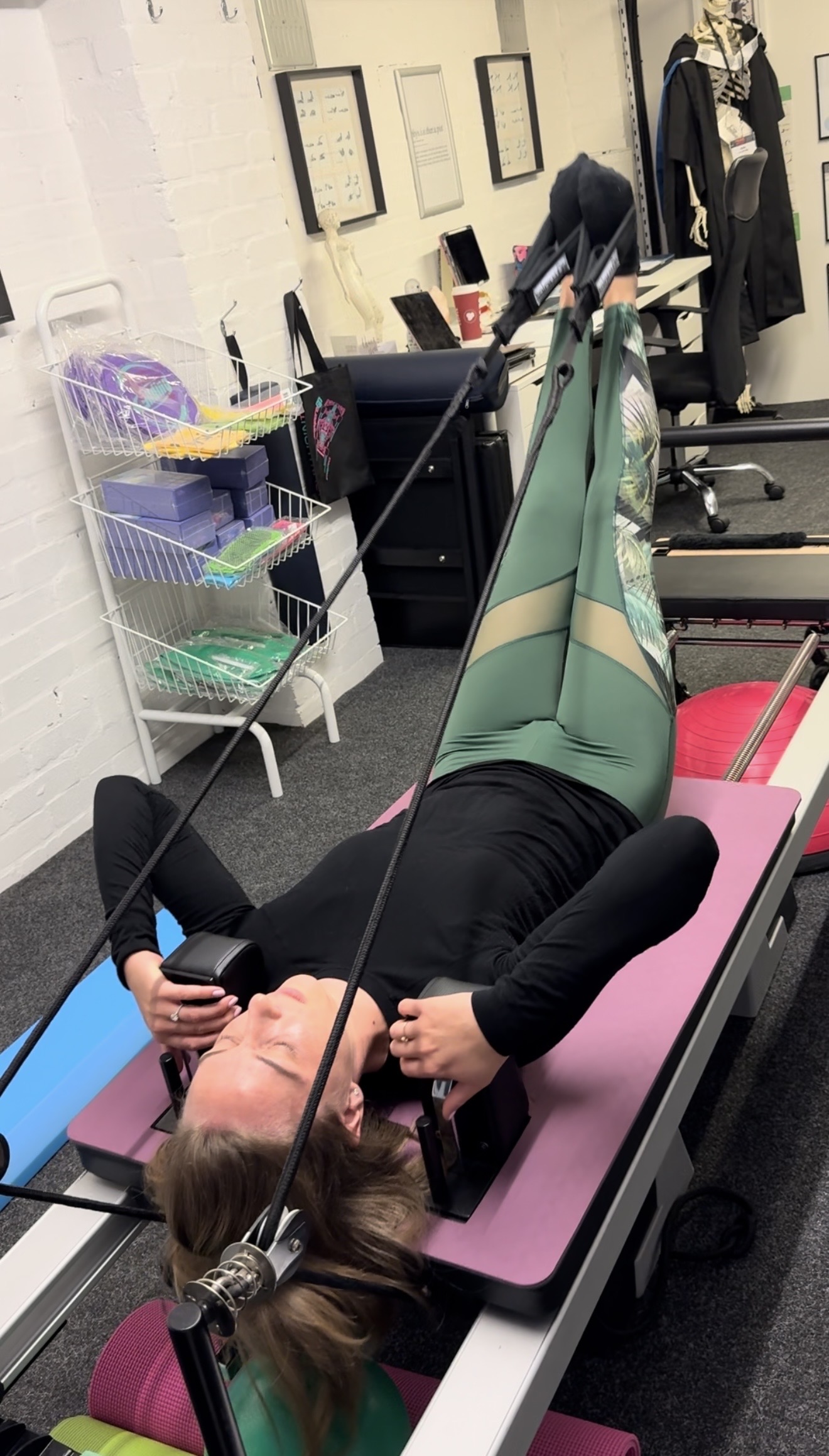
In January, I shared Abby’s story; she was in the later stages of her ACL rehabilitation and working toward a full return to higher-level activity.
I wanted to expand on that, because “late stage rehab” can mean different things to different people, and recently I’ve also been supporting patients at the very beginning of their ACL journey.
Here’s what that full spectrum actually looks like.
Late-stage ACL rehab (like Abby):
This is the phase after the basics are restored. Swelling has settled. Range of movement is good. Foundational strength is back.
But late-stage rehab isn’t just “getting stronger.”
It involves:
- Single-leg power and plyometric progression.
- Deceleration and change-of-direction control.
- Rotational stability.
- Fatigue testing.
- Psychological confidence rebuilding.
- Sport- or activity-specific loading.
This is where we move from “recovered” to genuinely resilient.
For Abby, that meant refining movement quality, building confidence under load, and preparing her body for the demands she actually wanted to return to, not just passing a time-based milestone.
Immediate post-op ACL rehab:
At the other end of the spectrum, I’m also seeing more patients in the very early stages following surgery.
This phase focuses on:
- Reducing swelling and pain.
- Restoring knee extension (crucial early goal).
- Gentle range restoration.
- Quadriceps activation.
- Gait re-education.
- Protecting the graft while promoting safe loading.
Early rehab sets the tone for everything that follows. The quality of this stage often determines how smoothly someone progresses later.
What makes our approach different:
ACL rehab isn’t one-size-fits-all, and it shouldn’t be purely exercise sheet-based.
My approach combines:
- Hands-on manual therapy to optimise joint mechanics and soft tissue mobility.
- Individualised, progressive exercise prescription.
- Reformers and supported loading to rebuild strength safely.
- Bungee-assisted systems to retrain deceleration and confidence.
- Research-backed return-to-sport criteria.
- Ongoing reassessment rather than time-based progression.
Rehab isn’t just about healing a ligament. It’s about restoring trust in your body.
Whether someone is 2 weeks post-op or 9 months into recovery and feeling “nearly there but not quite,” the goal is the same:
- Build strength.
- Restore control.
- Create resilience.
If you or someone you know is navigating ACL rehab, early or late stage, I’m always happy to discuss where you are in the process and what the next step should look like.
Recovery doesn’t have to feel uncertain. It just needs the right progression.
Jane x
Chartered Physiotherapist & Founder of Pole Kinetics PT